

Strata, HOA and Community Management Are Not the Same Thing
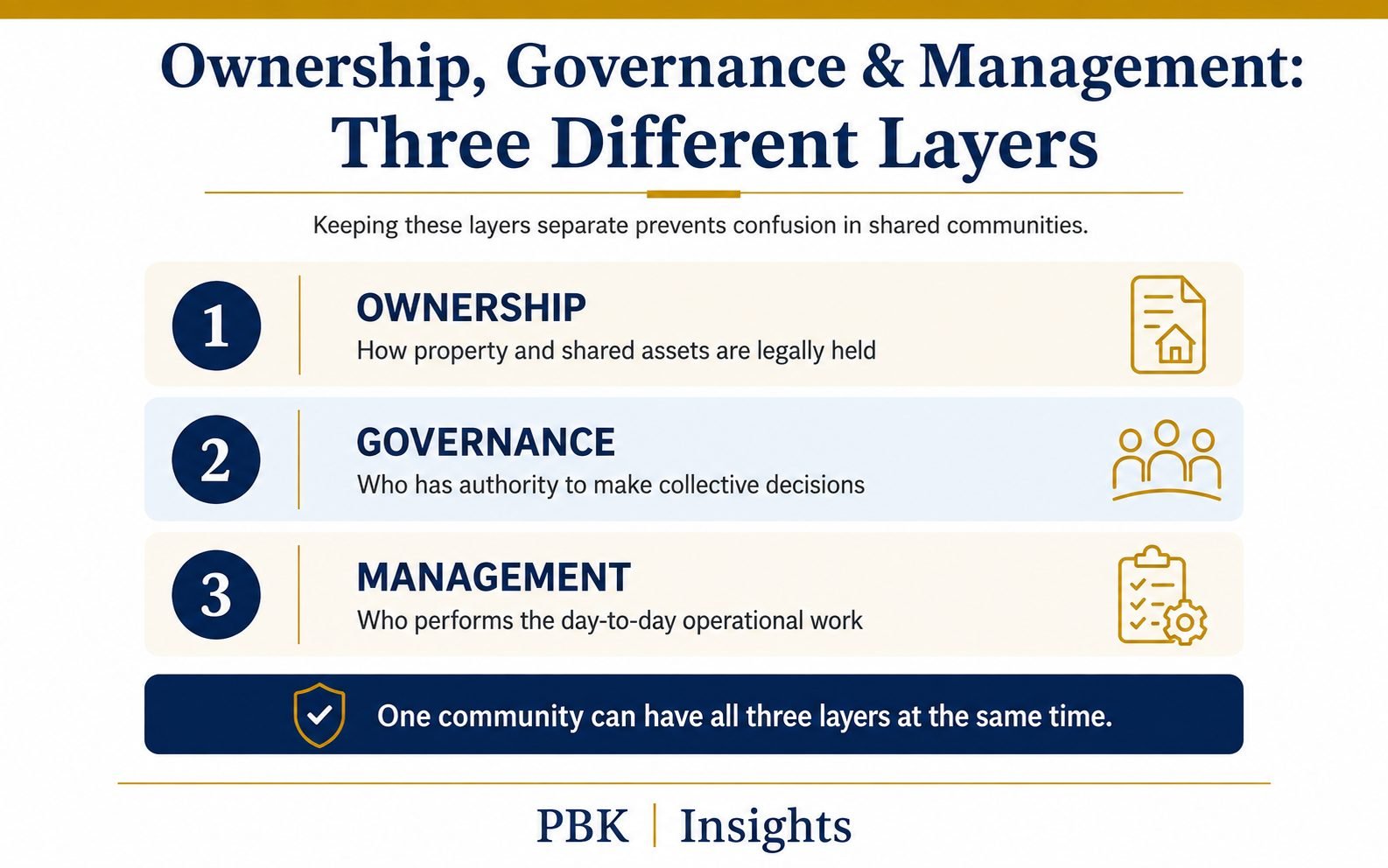
Ownership structure, governing body and operational management are three different questions. Confusing them is how a community ends up governed on paper and unmanaged in practice.
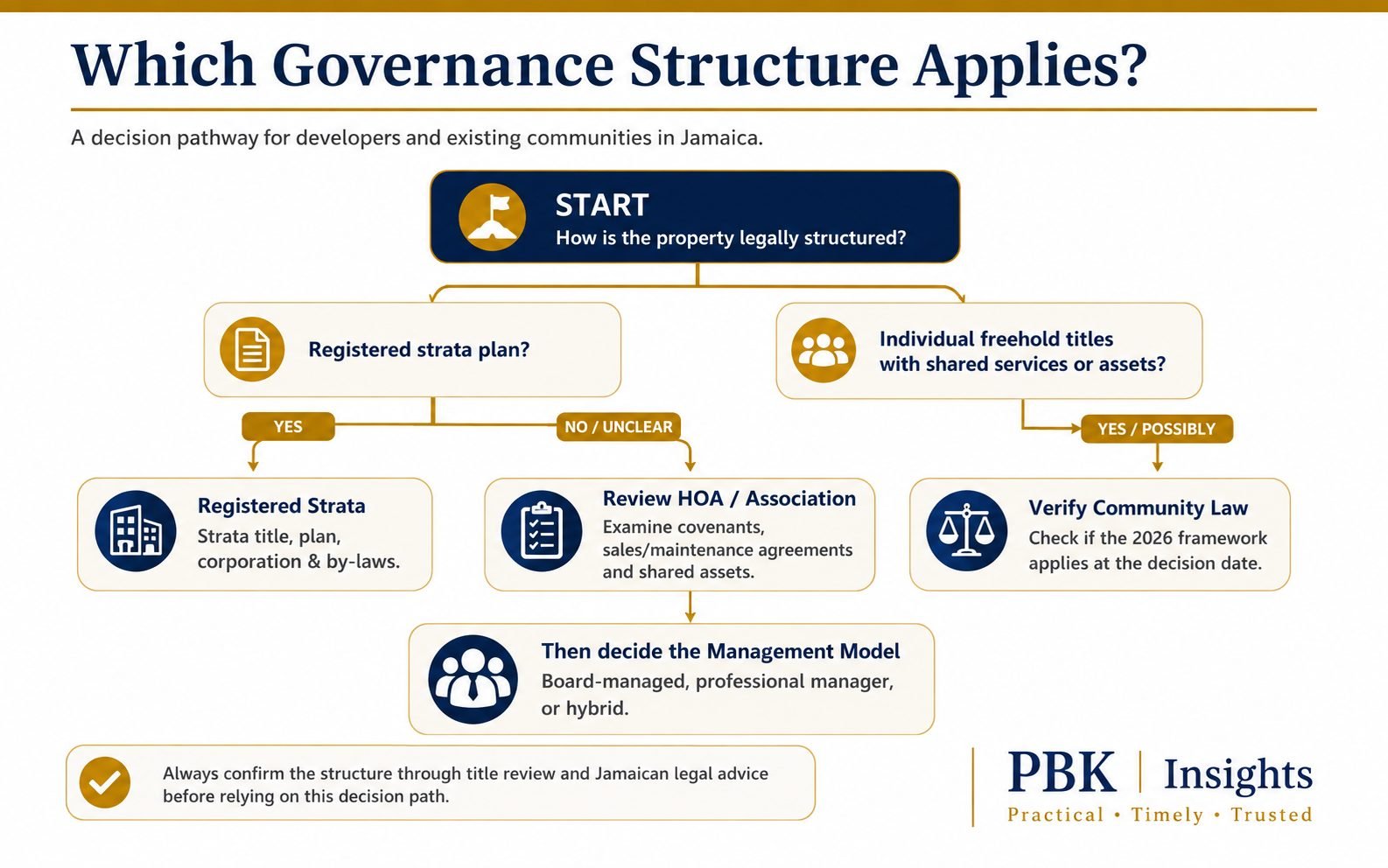
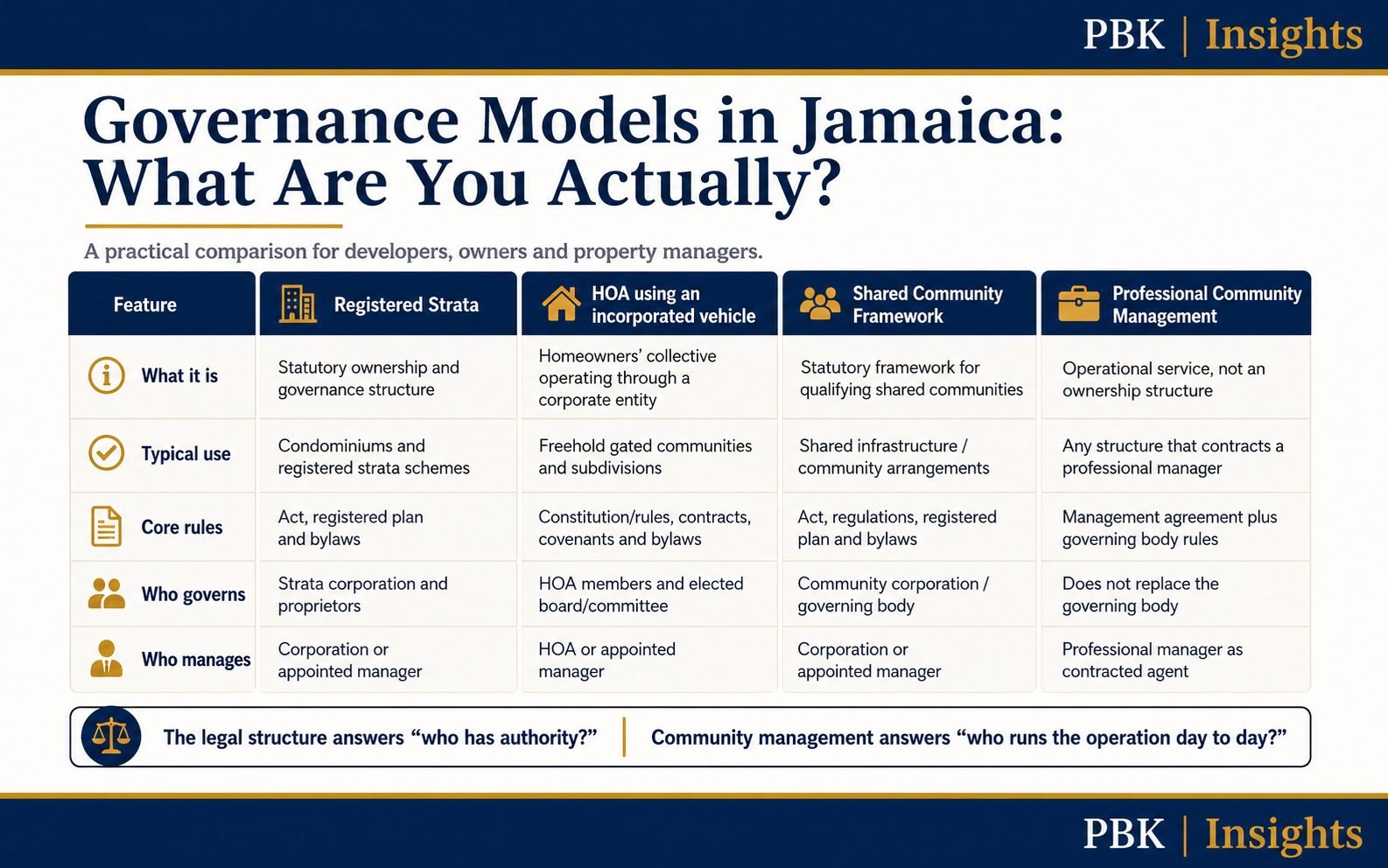
In Jamaica, the terms strata, HOA, gated community, Friendly Society and community management are often used as though they describe the same thing. They do not. The legal structure determines ownership, authority and enforcement. Community management describes the operational work required to keep the development functioning.
The distinction matters most to two groups: developers deciding how a scheme will be governed before they sell it, and purchasers trying to understand what they are agreeing to. Both are choosing a structure whose consequences last for the life of the building.
Registered strata
A strata is created through a registered strata plan under the Registration (Strata Titles) Act. Owners hold individual strata lots together with an inseparable interest in common property, and the proprietors collectively form the strata corporation.
- Typical use: apartment, condominium and certain townhouse or mixed schemes.
- Governance: strata corporation, executive committee, bylaws and general meetings.
- Finance: approved budgets and contributions apportioned by unit entitlement.
- Management: records, collections, maintenance, suppliers, accounts, meetings, compliance and reporting.
- Enforcement: statutory remedies for arrears and other breaches, subject to the required legal process.
A homeowners association is a purpose, not one automatic legal form
A homeowners association, or HOA, is the owners' collective body for a freehold or shared-services community. In Jamaica there is limited practical guidance on one standard HOA formation route. The association's legal vehicle and authority therefore have to be designed around the titles, covenants, sales agreements, maintenance agreements, ownership of common assets and services that the community must administer.
An HOA may use an incorporated entity or another legally appropriate structure. The label "HOA" describes what the organisation is intended to do; it does not by itself create a corporation, property rights or enforcement powers.
Using a Friendly or Benevolent Society as the HOA corporation
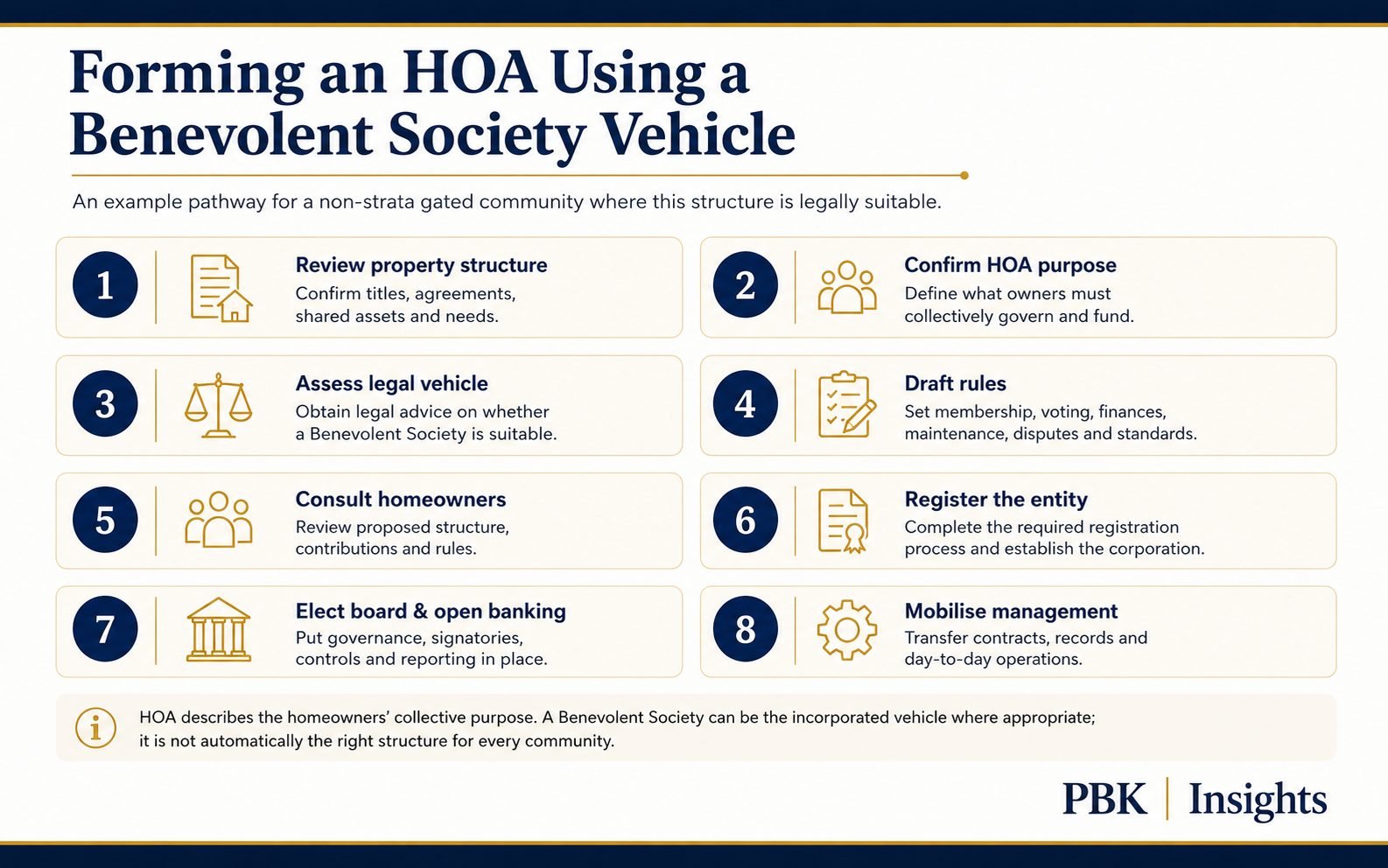
In one anonymised Paul Bèl Kay and HoShing assignment, the client asked us to establish an HOA. After reviewing the community's agreements, infrastructure and operational needs, the recommended route was to register the HOA's corporate body as a Benevolent Society under the Friendly Societies framework. The Society was not separate from the HOA; it was the legal and governance vehicle through which the association could operate.
- Secure the required homeowner support and minimum membership
- Develop the Society's rules as the HOA constitution and bylaws
- Define membership, meetings, elections, financial controls and dispute resolution
- Integrate property standards, garbage, parking, pets, rentals and architectural rules
- Register the Society and establish its office, bank account and accounting system
- Elect and train the Committee of Management
- Transfer supplier contracts, records and operating responsibilities from the developer
This route is not a universal formula. A Benevolent Society cannot create property rights or collection powers that are absent from the registered titles and contracts. The correct approach requires legal review of the specific development.
Shared communities and the 2026 legislative framework
The Registration (Shared Community) Bill, 2026 has been proposed to create a clearer framework for developments with shared services or common property that sit outside the traditional strata regime. It is relevant to gated residential and commercial communities because it contemplates registered community plans, community corporations, bylaws, maintenance arrangements, owner contributions and regulatory oversight.
Governance is not the same as management
Community management is not an ownership or title category. It is the work of turning the authorised structure into reliable services and accountable administration. It may support a strata corporation, an HOA, a Benevolent Society, a future shared-community corporation or a commercial development.
- Budgeting and contribution collection
- Rubbish, sanitation, landscaping and maintenance
- Security, utilities and shared infrastructure
- Supplier procurement and contract supervision
- Resident communication and complaints
- Records, banking, accounts and reporting
- Meeting, governance and compliance support
A correctly registered corporation with no budget, no records and no supplier contracts is governed on paper and unmanaged in practice.
What a purchaser needs to understand before buying
A buyer is not only acquiring a unit; they are joining a governing body and taking on the obligations that come with it. Before committing, a purchaser should know which structure governs the development, what the contribution is based on, what the rules restrict, and who will be administering all of it on the day they move in.
Contributions are not optional charges. For a registered strata, the Commission of Strata Corporations explains that a corporation may apply for a certificate of power of sale to recover contributions that have remained outstanding after statutory requirements are met. That is a serious remedy, not an immediate consequence of one missed payment — but owners should understand where persistent default leads. Equally, a corporation cannot expect good collections while providing no credible budget, accounts or service. Compliance and trust are built together.